




A lot of questions are coming in lately in my Instagram DMs about maintaining fitness and weight loss results and if you’re reading this, chances are you’ve just completed your fitness program or you’re curious about what comes after :)
Maintaining these results can be really challenging, but with the right strategies, it’s absolutely possible to keep the weight off and stay in shape!
In this blog post, I will answer questions on how to maintain fitness and weight loss results. Plus, I’ll be adding some lessons and tips that can hopefully work for you.
HOW TO MAINTAIN WEIGHT LOSS PROGRESS AFTER FINISHING A FITNESS PROGRAM?
Sadly, many people who lose weight eventually put it back on. About 20%-25% of overweight dieters manage to successfully lose weight and keep it off over time. People regain the weight that they lose because of restrictive diets, wrong mindset, and lack of sustainable habits.
BUT, don’t let this discourage you. As I’ve mentioned in one of my previous blog posts, maintaining a healthy lifestyle shouldn’t be too difficult, even if it might be challenging at times. You can maintain your weight loss in a number of ways that have been proven and tested. These are the following:
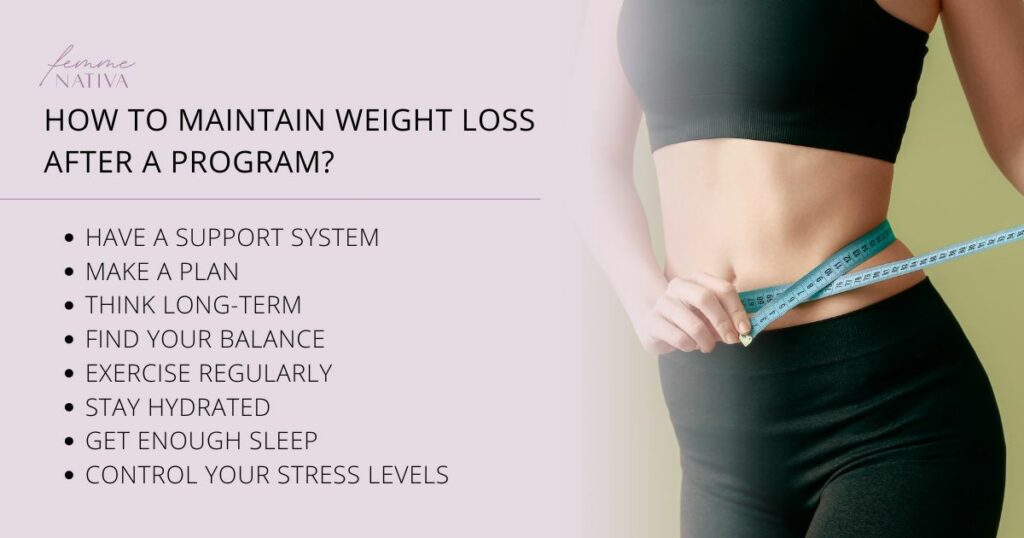
HAVE A SUPPORT SYSTEM
This is important, but it often slips through the cracks. If your family, partner, or housemates are eating unhealthy and partying every weekend, chances are you’ll fall into the same habits.
Try talking to someone you live with and ask for their support! If you live alone, find a friend or a family member who shares your goals and keeps each other motivated.
MAKE A PLAN
If you just eat whatever and do whatever exercise you feel like, you might maintain your weight, but it’s unlikely you’ll make much progress. You need a plan, even if it’s just one you jot down yourself.
Schedule your workouts, and write them on a piece of paper—this keeps you accountable and makes you more likely to stick with it. Do the same for your meals!
Also learn how to balance your meal, try to stick to around 200–400 calories less than your ideal calorie intake :)
THINK LONG-TERM
Losing weight and maintaining a healthy lifestyle is a lifelong journey. While setting short-term goals is great, always keep the bigger picture in mind.
If you don’t hit your short-term goal, you might feel like giving up. But don’t! This is about creating habits you can stick with forever, and it’s okay if it takes time. Slow and steady progress is far better than crash dieting and then quitting.
FIND YOUR BALANCE
As I mentioned before, this should be something you can commit to for life. Can you realistically say you’ll LIMIT your sugar intake? If that works for you, that’s fantastic!
But for many, it’s not sustainable and can lead to binge eating and other problems. It’s better to avoid being overly strict and instead focus on sticking to your exercise plan and eating healthily most of the time. If you have a less healthy meal out with friends or family, don’t beat yourself up—just enjoy the moment!
You can totally give the 80:20 rule a shot with your eating habits. I personally follow this approach where I focus on healthy choices—like veggies, lean proteins, around 80%. Then, for that other 20%, I enjoy some treats when I really feel like it or when I’m out with friends and family.
And hey, don’t stress if you have a day where things don’t go according to plan. We’re all human, after all. Just like me, you can pick yourself up, aim to get back on track, and keep aiming for that balance between feeling good and enjoying your food.
EXERCISE REGULARLY
Stick to a regular exercise routine. It doesn’t have to be as intense as during your weight loss phase, but staying active is important. Engaging in at least 30 minutes of exercise daily can assist in maintaining weight by balancing the calories you take in and the calories you burn.
RELATED POST: TOP 7 EXERCISES YOU CAN DO INSTEAD OF SQUATS AND LUNGES
STAY HYDRATED
Drink plenty of water. Drinking water is proven to be beneficial for weight maintenance. It can make you feel fuller, potentially reducing calorie intake if you drink a glass or two before meals. Drinking water may slightly increase the number of calories you burn throughout the day.

GET ENOUGH SLEEP
Getting enough sleep is also important in weight maintenance. Getting enough sleep can really help you maintain a healthy weight by keeping your energy levels up and your hormones balanced.
If you’re finding it hard to get enough rest and sleep, there are natural supplements that can really make a difference. These are the four natural supplements I use daily to help improve my sleep.
CONTROL YOUR STRESS LEVELS
Your mental health plays a crucial role in maintaining your weight, thus it must be given the same amount of importance and consideration. Managing stress is crucial for weight maintenance because high-stress levels can raise your appetite and potentially lead to weight gain.
RELATED POST: IS STRESS CAUSING YOUR WEIGHT GAIN?
TAKE BREAKS BETWEEN FITNESS ROUTINES
You probably already know that I DO recommend rest days. When I first got serious about fitness, I thought I had to go hard all the time—no breaks, just pushing myself to the max. But as I got more into it, I realized how important those breaks really are.
I’ve been there, feeling totally drained from too much time in the gym. That’s when I figured out how IMPORTANT it is to take regular breaks. Trust me, it’s not just about feeling good—it’s about making your fitness routine stick and stay fun.
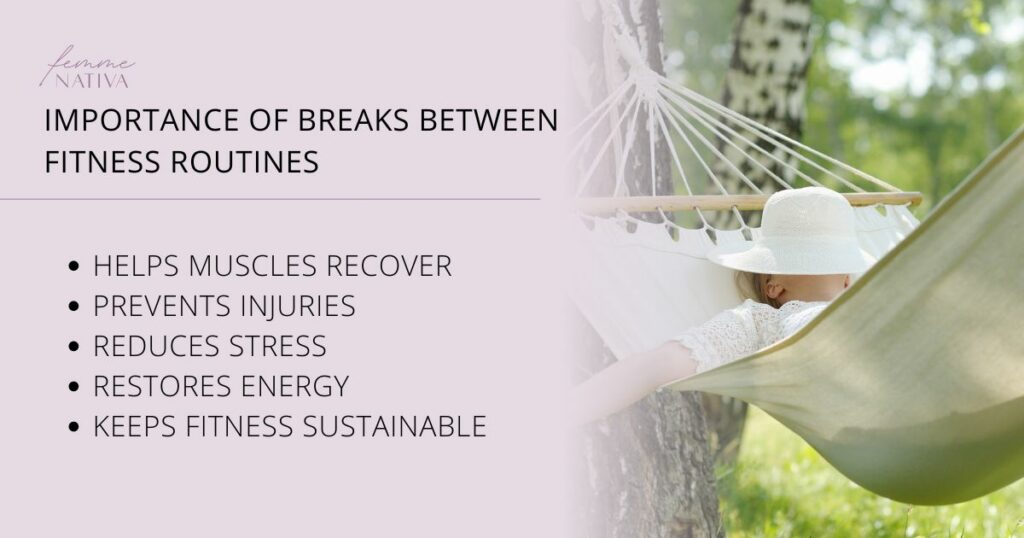
Taking breaks helps your muscles recover and grow stronger. It lowers the chances of getting hurt and helps you make steady progress in your fitness journey.
But that’s not all. Rest days also give your mind a break. They reduce stress and prevent burnout, which is super important for staying motivated and focused on your fitness goals. Plus, when you come back after a day off, you often feel more energized and ready to tackle your workouts with renewed enthusiasm.
So, remember to give yourself some downtime—it’s a key part of staying healthy, strong, and consistent in your fitness journey. Your body and mind will thank you for it!
WHAT SHOULD I DO ON MY REST DAYS?
Here’s a tip that’s worked wonders for me, instead of a full-on rest day, I go for an “active recovery” day. It’s amazing how this keeps me on track with healthier eating habits—maybe it’s the endorphins or just feeling productive, but it really clicks for me!
On active recovery days, I keep things light and fun. I’ll go for a leisurely walk, enjoy a hike, take a yoga class, or spend some time stretching. Sometimes, I’ll head to the beach for a walk and a swim, or do a little ab workout to focus on my core. The main idea is to keep moving and make sure I’m having a good time doing it!
HOW MANY DAYS SHOULD I ALLOT FOR REST DAYS?
When you’re working out hard, your body needs time to recover. It’s during these breaks that your muscles fix themselves and get stronger. If you keep pushing without resting, your body misses out on this important recovery time.
That’s why I always suggest taking at least 1-2 rest days each week, its to make sure you maintain your fitness progress. Skipping rest can actually slow you down, so those days off are really important for staying on track.
CONTINUE WALKING AND EXERCISING
Apart from general questions on maintaining fitness and weight loss progress, my Instagram inbox is also flooded with questions about whether to continue their walks and exercises.
To answer these questions, YES, you should continue your walks and exercises. Regular exercise and walking work wonders in maintaining fitness and keeping those weight loss progress steady.
RELATED POST: 5 WAYS TO MAKE WALKING FUN
HOW MANY TIMES DO I NEED TO EXERCISE?
To keep your weight in check and stay healthy, try aiming for at least 150 minutes of moderate exercise or 75 minutes of vigorous activity each week. I know it sounds like a lot, but breaking it down makes it more manageable—think 30 minutes a day, five days a week. And don’t forget to include muscle-strengthening exercises twice a week. This routine has really worked for me, and it feels great to stay active!
HOW OFTEN SHOULD I WALK?
I try to walk for at least 30 minutes most days of the week. If walking is your main workout, you might want to bump it up to 60 minutes a day, depending on what you’re aiming for. And don’t worry, you can totally break it up into shorter walks throughout the day. That’s what I do, and it really helps!
WILL I LOSE PROGRESS IF I STOP MAKING 10,000 STEPS PER DAY?
The 10,000 steps goal is a great motivator, but don’t worry if you don’t hit it every single day. I’ve learned that consistency is what really counts. If you miss a day or two, it’s no big deal—just get back on track when you can. Staying active overall is what makes the biggest difference.
FINAL THOUGHTS
Alright, you’ve got this! Remember, fitness is a lifelong journey, not a sprint. Celebrate your successes, learn from setbacks, keep pushing towards your goals, and don’t deprive yourself of rests and breaks. You’ve already proven you’re capable of amazing things. Stay strong, stay motivated, and keep shining bright!
Love Rachael xx

SOURCES
- 20%-25% of Overweight Dieters – https://www.mdpi.com/2072-6643/14/6/1259
- People Regain Weight – https://health.clevelandclinic.org/why-people-diet-lose-weight-and-gain-it-all-back
- Lifelong Journey – https://www.ucihealth.org/blog/2020/01/weight-loss-psychology
- Assist in Maintaining Weight – https://www.ncbi.nlm.nih.gov/pmc/articles/PMC3925973/
- Drinking Water – https://www.ncbi.nlm.nih.gov/pubmed/14671205
- Lowers the Chances of Getting Hurt – https://www.medicalnewstoday.com/articles/rest-day
- Endorphins – https://my.clevelandclinic.org/health/body/23040-endorphins
- 150 minutes of Moderate Exercise – https://www.mayoclinic.org/healthy-lifestyle/fitness/expert-answers/exercise/faq-20057916





 It’s FREE
2 Responses
Hi,
Part where you say 150min of moderate exercise a week or 30 minutes a day/five days a week, does that mean 5 resistance training sessions, or is walking counted as exercise?
Thank you
Hey Lovely,
Thanks for reaching out!
The 150 minutes of moderate exercise per week can include walking at least 5 days a week if possible. You can also incorporate 3-4 resistance training sessions each week to balance your routine and achieve your fitness goals.
If you need anything else, please let us know.
Love,
FN Team❤️