



Working out is among the favorite pastimes of Americans, with people of all ages choosing to exercise. According to Statista, nearly 58% of Americans exercise at least three times per week. While running, hiking, and biking are the most popular physical activities, many people are gym buffs too.
Whichever workout you choose, there are always chances of sustaining injuries. You may overexert yourself, fall while running, or slip at the gym. Experiencing a workout injury can be frustrating and disheartening. You may feel even worse when you are eager to return to your fitness routine.
Fortunately, bouncing back quickly after an injury is possible. However, recovery requires a balance between healing and maintaining your fitness levels. In this article, we will list some actionable tips to get back on track after workout injuries.
LISTEN TO YOUR BODY
Military.com recommends listening to your body before your daily workouts. Pay attention to cues like low energy levels, aches and pains, discomfort, and stiffness. This may indicate the start of an injury. Similarly, you must listen to your body’s signals when recovering from a workout injury.
If you experience pain during any physical activity, you must not ignore these red flags. Pushing through pain can result in setbacks or new injuries. Your body’s feedback should be a priority during the recovery journey. As a rule, you must avoid activities that cause pain or discomfort.

Keep an eye on the injured area as swelling or stiffness is a sign to stop. Be patient with yourself as recovery does not happen overnight.
HOW MUCH TIME DOES IT TAKE TO RECOVER FROM A WORKOUT INJURY?
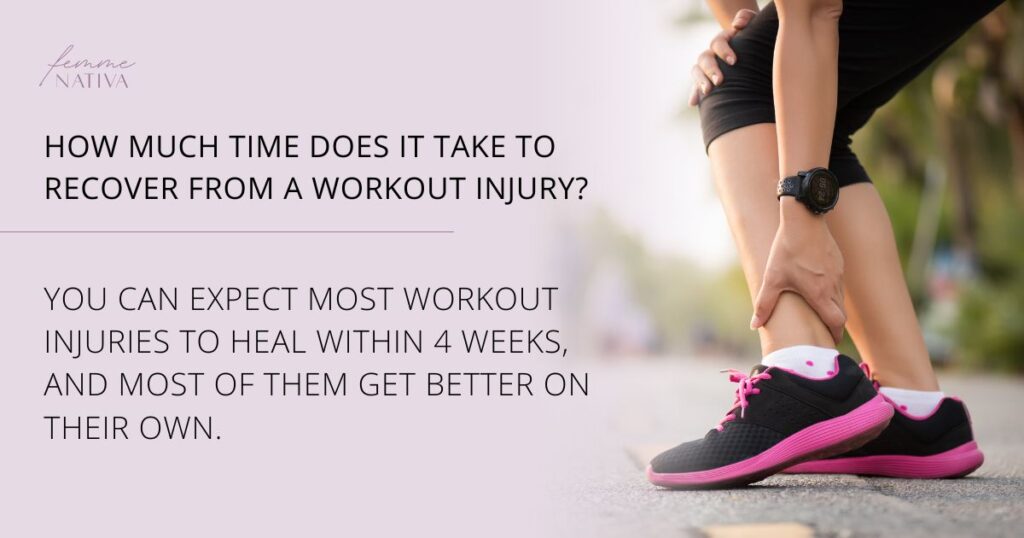
You can expect most workout injuries to heal within 4 weeks, and most of them get better on their own. If it does not improve within a couple of weeks, consider seeing a specialist like a physiotherapist. Trying to get back to your fitness routine too early can aggravate the injury, so you should avoid rushing.
RELATED POST: SAFE EXERCISE ALTERNATIVES FOR BACK AND KNEE PROBLEMS
SEEK MEDICAL ADVICE
Even if you feel better after some rest and first aid, do not take things for granted. You must see your healthcare provider before resuming any physical activity. An expert can assess your injury and provide a tailored recovery plan. They may also advise when it is time to restart your training program.
Seeing a physical therapist is a good idea as they can guide you through specific exercises to alleviate pain and tension. Moreover, they ensure that you do not overstrain the injured area.
A massage therapist or acupuncturist may help promote circulation and accelerate healing. Follow the recovery plan and schedule regular follow-ups to monitor progress.
DON’T GO OVERBOARD WITH PAINKILLERS
Severe pain after a workout injury requires treatment with painkillers. An NIH study suggests that many sportspersons rely on analgesics to manage pain. The prevalence varies from 2.8% among (professional tennis players to 54.2% among professional soccer players. Analgesics can also help common people deal with workout injuries.
Those who undergo orthopedic surgeries may be recommended opioids for pain management. However, over time, there are chances of developing opioid addiction. Medications like Suboxone can help you overcome this habit, but it comes with serious side effects. TorHoerman Law highlights that the acidic formula of Suboxone can cause severe dental damage and decay.
The extent of damage can be gauged from the fact that many users have filed Suboxone lawsuit claims against the manufacturer, Indivior. The lawsuit states that the manufacturer failed to warn users about the possible side effects of the medication.
For those recovering from working injuries, cutting the use of painkillers is the best piece of advice. You can seek holistic remedies instead of painkillers that may make you habitual.
SHOULD YOU AVOID PAINKILLERS IN THE LONG RUN?
Painkillers, both prescription and over-the-counter, can relieve pain, but they are not good long-term solutions. Excessive and prolonged use can lead to side effects such as kidney issues, dependency, and tolerance. They should be taken only under medical supervision and discontinued after some time.

START SLOWLY AND GRADUALLY INCREASE THE INTENSITY
WebMD recommends staying active during recovery as it can speed up the healing process. However, you must not stress the injured area until you are back to normal. Try new workouts that do not strain your body. For example, you can exercise your arms and shoulders if you have a sprained ankle.
Even when you’re cleared to exercise again, begin at a reduced intensity. Starting at around 50% of your usual effort is a good idea. You can gradually resume your pace as your body gets accustomed to your exercise routine again. This approach helps prevent reinjury and gives other muscles that may have weakened during inactivity a chance to regain strength.
Low-impact activities like walking or swimming are a good way to get back on track. Also, avoid high-impact sports until you have regained sufficient strength.
HOW LONG SHOULD I WAIT BEFORE RESUMING EXERCISE AFTER A WORKOUT INJURY?
The timeline for returning to exercise depends on factors such as the type and severity of the injury. Consulting your healthcare provider for personalized advice is your best bet. Ideally, you must take double the time you have been inactive before starting full-intensity workouts again.
Injuries are a part of an active lifestyle, and they can happen no matter how careful you are. While you cannot avoid injuries, you can implement these realistic steps to regain strength and recover from them. Most importantly, give yourself time to heal and be patient. Your body will tell you when it is ready to go full throttle again.








 It’s FREE