



Hi lovelies! I know I’ve written blog posts on menopause and perimenopause before, covering topics like the Approach to Exercise and Supplements and Weight Loss and Nutrition Tips for Perimenopause and Menopause. But I still think there’s so much more to discuss—especially when it comes to managing the symptoms and feeling like yourself again.
In this blog, I’ll also answer some common questions from women in our community and share my advice on how to manage perimenopause and menopause symptoms so you can feel more empowered and supported during this transition :)
And if you’ve been dealing with mood swings, hot flashes, or simply not feeling like yourself, this post will give you practical tools to help you manage perimenopause and menopause symptoms. It’s all about making things easier and helping you feel your best. Let’s dive in and tackle this together!
ARE PERIMENOPAUSE AND MENOPAUSE SYMPTOMS THE SAME?
This is one of the most common questions I hear, and it’s a great place to start. While perimenopause and menopause are closely connected, they’re not quite the same thing, and their symptoms can feel a little different.
WHAT IS PERIMENOPAUSE?
Perimenopause is the lead-up to menopause and can last for several years. It usually starts in your 40s but might begin earlier for some women. During this time, your body’s hormone levels—especially estrogen—start to fluctuate. This is what causes most of the symptoms.
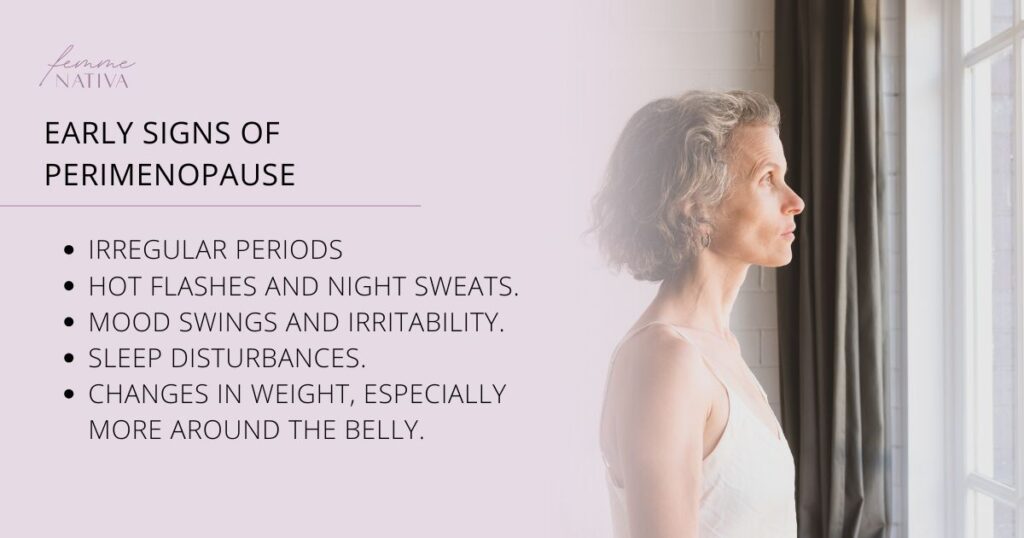
Some early signs of perimenopause include:
- Irregular periods (they might be shorter, longer, heavier, or lighter).
- Hot flashes and night sweats.
- Mood swings and irritability.
- Sleep disturbances.
- Changes in weight, especially more around the belly.
WHAT IS MENOPAUSE?
Menopause happens once you’ve gone a full year without a period. At this point, your hormone levels stabilize at a lower level, and your ovaries stop releasing eggs. While some of the symptoms you feel during perimenopause might stick around, they often become less intense over time.
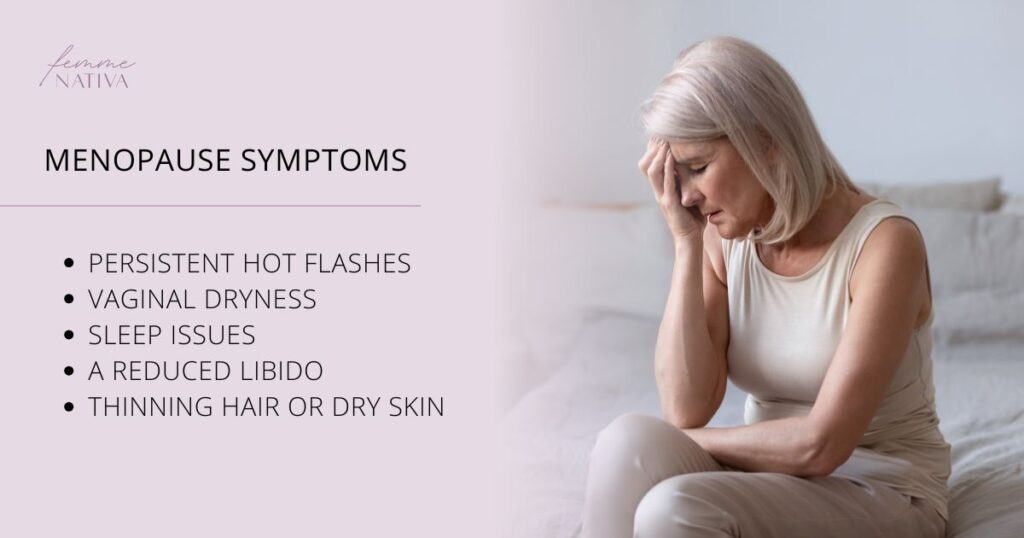
Typical menopause symptoms include:
- Persistent hot flashes.
- Vaginal dryness.
- Sleep issues.
- A reduced libido.
- Thinning hair or dry skin.
So, while some symptoms overlap, perimenopause is more about the unpredictable ups and downs of hormone changes, and menopause is about adjusting to new, lower levels of hormones.
WHAT ARE THE SYMPTOMS OF PERIMENOPAUSE AND MENOPAUSE?
Here’s a more detailed breakdown of the symptoms you might experience:
| Perimenopause Symptoms | Menopause Symptoms |
|---|---|
| Irregular periods | Persistent hot flashes |
| Hot flashes and night sweats | Vaginal dryness |
| Mood swings and irritability | Reduced libido |
| Sleep disturbances | Thinning hair and dry skin |
| Weight gain, especially around the abdomen | Increased risk of osteoporosis |
| Brain fog or trouble concentrating | Sleep problems (sometimes worsening) |
It’s important to remember that no two experiences are the same. Some women might only notice mild symptoms, while others feel like they’ve been hit by a hormonal freight train. Either way, there are ways to manage these changes effectively.
HOW TO TAKE CARE OF YOURSELF DURING PERIMENOPAUSE
Alright, lovelies—let’s get into the heart of it. Managing perimenopause and menopause symptoms doesn’t have to feel overwhelming. With the right tools and mindset, you can take charge of your health and feel like yourself again. Here are my best tips:
1. LISTEN TO YOUR BODY
This is your number one superpower during perimenopause and menopause. Some days you’ll feel on top of the world, and others… not so much. That’s okay! It’s all about honoring what your body needs each day. If you’re tired, rest. If you have energy, move!
2. NOURISH YOUR BODY WITH THE RIGHT FOODS
What you eat makes a huge difference in how you feel. Focus on:
- Protein: Helps keep you feeling full and supports muscle health. Think chicken, fish, tofu, or eggs.
- Healthy fats: Avocados, nuts, seeds, and omega-3-rich fish like salmon are your best friends.
- Phytoestrogens: Foods like flaxseeds, soy, and chickpeas mimic estrogen and might help balance your hormones.
- Cut back on sugar and processed foods: These can spike your energy and then leave you crashing.


3. KEEP YOUR BODY MOVING
Exercise is so important—not just for physical health but for your mood too. But don’t overcomplicate it! Start with things you love.
- Walking: You know how much I love walking—it’s gentle but effective.
- Strength training: This helps keep your bones strong and maintains muscle tone (so important right now!).
- Yoga or Pilates: Perfect for calming your mind, stretching out tight muscles, and improving flexibility.
4. HYDRATE, HYDRATE, HYDRATE
You might feel more dryness during perimenopause and menopause (skin, hair, even joints). Drinking enough water—at least 2 liters a day—can help so much. Plus, staying hydrated supports digestion and energy levels.
5. PRIORITIZE SLEEP
I know sleep can feel tricky right now, but good sleep is a game-changer.
- Wind down early: Create a calming bedtime routine to signal it’s time to sleep.
- Cool your room: It can help with night sweats and make sleep more comfortable.
- Limit caffeine: Especially in the afternoon or evening.
6. CONSIDER MEDICAL SUPPORT IF YOU NEED IT
There’s no shame in seeking extra help if your symptoms feel unmanageable. A quick chat with your doctor could make a world of difference. Options include:
- Hormone Replacement Therapy (HRT): Great for easing hot flashes and other symptoms.
- Supplements: Omega-3s for brain and heart health, magnesium for sleep, and calcium for your bones.
7. MANAGE STRESS
Stress can make symptoms worse, so it’s important to find ways to relax and recharge.
- Meditation or breathing exercises: Even just 5 minutes can calm your mind.
- Journaling: Write down your thoughts to clear your head.
- Self-care: Take a bath, get a massage, or spend time on a hobby you love.
RELATED POST: IS STRESS CAUSING YOUR WEIGHT GAIN?
8. STAY CONNECTED
Don’t go through this alone. Chat with your friends, join a support group, or connect with others online. Sharing your experiences (and hearing theirs) can make you feel so much lighter and less isolated.
HOW CAN I FEEL BETTER DURING PERIMENOPAUSE?
Small lifestyle changes can make a huge difference in how you feel:
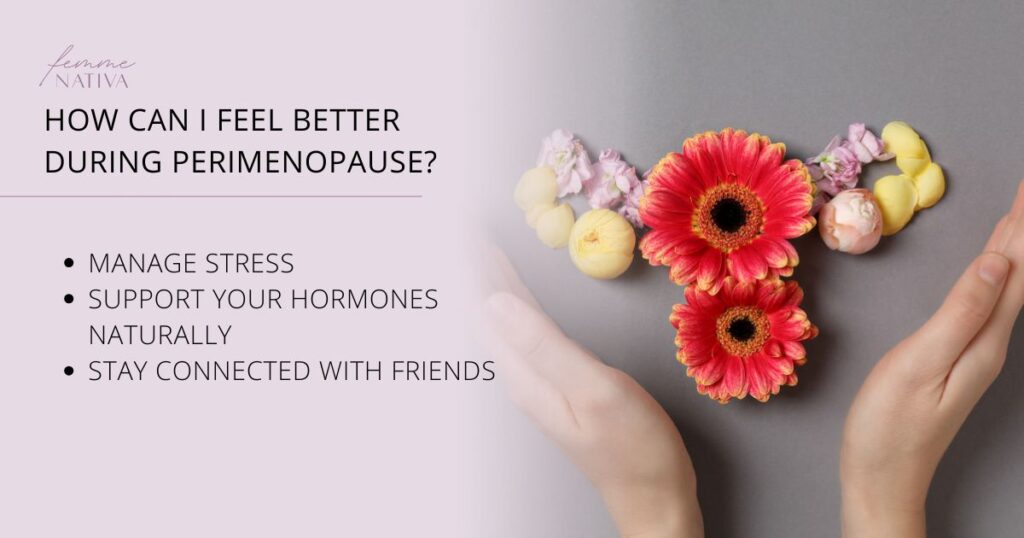
1. MANAGE STRESS
Hormonal changes can make you more sensitive to stress, so finding ways to relax is essential.
- Try meditation, deep breathing exercises, or journaling.
- Spend time in nature or do something creative like painting or cooking.
2. SUPPORT YOUR HORMONES NATURALLY
Herbal remedies like black cohosh or red clover might help with hot flashes. Adaptogens like ashwagandha can support stress management and hormone balance.
3. STAY CONNECTED
Talking to friends, joining a support group, or even seeking professional counseling can help you process the emotional side of this transition.
WHAT IS THE BEST THING TO TAKE FOR PERIMENOPAUSE?
There’s no single answer to this because every woman’s needs are different, but here are some options to consider:
- Hormone Replacement Therapy (HRT): Can help with symptoms like hot flashes and vaginal dryness but should be discussed with your doctor.
- Supplements:
- Magnesium for better sleep and reduced anxiety.
- Omega-3s for heart and brain health.
- Evening primrose oil for hot flashes and breast tenderness.
- Natural Approaches: Herbal teas, acupuncture, or aromatherapy can provide relief for some women.
HOW TO MENTALLY DEAL WITH PERIMENOPAUSE
The mental and emotional side of perimenopause is just as important as the physical changes.
1. LEARN ABOUT WHAT’S HAPPENING
The more you understand your body, the less intimidating these changes will feel. Educate yourself, ask questions, and talk to your healthcare provider.
2. BE KIND TO YOURSELF
Remember, you’re not alone in this journey. It’s okay to have days where you feel overwhelmed. Focus on small wins and celebrate them.
3. BUILD A SUPPORT SYSTEM
Share your feelings with loved ones or connect with other women going through the same experience. Having a support network can make a world of difference.
FINAL THOUGHTS
Hey lovelies, I know perimenopause and menopause can feel like a wild ride. All the changes in your body, your emotions, and everything else can be so overwhelming. But here’s the thing: this is also a time to really take care of yourself and show yourself some love. By making small changes—like eating nourishing foods, staying active, and finding ways to manage stress—you can not only handle the symptoms better, but you’ll also reconnect with your inner strength and resilience.
And don’t forget, you are so not alone! There are tons of women out there going through the same thing, and you’ve got a whole community here to support you. If things feel tough, that’s totally okay—just take it one step at a time and reach out when you need help.
Above all, be kind to yourself. You’re going through one of the most life-changing times, and you absolutely deserve to feel supported, empowered, and hopeful. You’ve got this, and we’re all rooting for you!





 It’s FREE