




Do you feel like your body is out of sync and you can’t figure out why, especially before and during your period? I get it—I’ve been there myself and I know a lot of women who struggle with their main sex hormones, estrogen and progesterone. Managing hormonal health can seem tricky, but with the right strategies and a bit of guidance, you can get back on track and start feeling your best!
In this blog post, I’ll guide you through effective ways to manage your female hormonal health. We’ll cover understanding the main female sex hormones, estrogen, and progesterone, addressing ways you can check your hormones, and how to manage your hormonal health. Remember, managing hormones is a continuous process, not an overnight fix.
UNDERSTANDING ESTROGEN AND PROGESTERONE
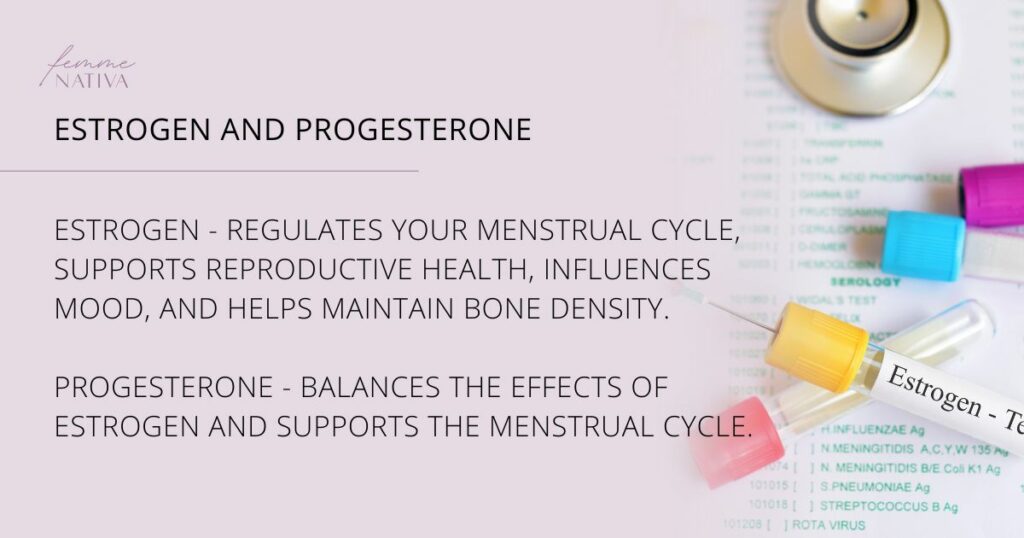
Before going into the nitty gritty of hormonal health, let’s start with two key hormones: estrogen and progesterone. These hormones are super important for women because they help regulate our menstrual cycles, reproductive health, mood, and even bone density. But when they’re out of balance, they can cause various health issues.
For instance, high levels of estrogen are linked to a higher risk of breast and uterine cancer and lead to issues like menstrual problems and weight gain. Progesterone, on the other hand, isn’t directly linked to weight gain, but if there’s an imbalance where estrogen is too high compared to progesterone, it can lead to weight changes and other symptoms. Knowing how these hormones work can help you figure out when something might be out of balance.
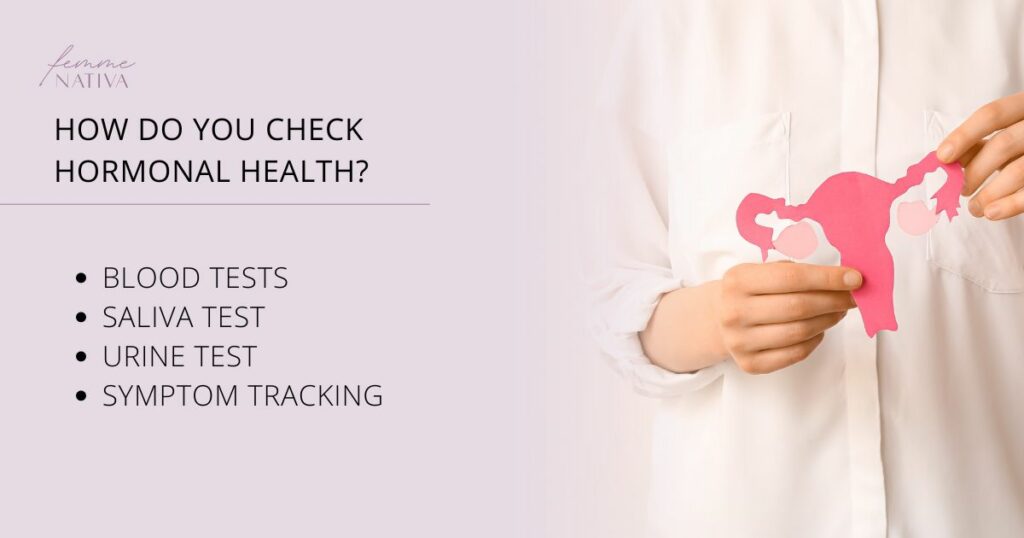
HOW DO YOU CHECK HORMONAL HEALTH?
Getting a clear picture of your hormonal balance is an important step in taking charge of your hormonal health and feeling your best. By checking in on your hormone levels, you can spot any imbalances that might be affecting your mood, energy, and overall well-being.
Here’s how you can find out if your hormones might be out of sync:
BLOOD TESTS
Blood tests can be super helpful for figuring out what’s going on with your hormones! They give you a peek into your hormone levels, helping you spot any imbalances that might be affecting how you feel.
If you think you might be experiencing symptoms of a hormone imbalance, don’t hesitate to reach out to a doctor—like a gynecologist or endocrinologist. They can run some tests and give you the full picture to help you get back on track!
| Hormone | Purpose | What It Reveals |
|---|---|---|
| Estrogen | Measures levels of estrogen | Helps assess if levels are too high or too low |
| Progesterone | Measures levels of progesterone | Important to understand its balance with estrogen |
| Thyroid Hormones | Includes TSH, T3, and T4 | Assesses thyroid function affecting metabolism and energy levels |
| Cortisol | Measures the stress hormone | Evaluate how your body responds to stress |
SALIVA TESTS
Saliva tests are another useful tool for tracking your hormone levels throughout the day However, keep in mind that saliva tests are used less often than blood and urine tests. Always chat with your doctor about whether a saliva test is the right choice for you! Your health journey is important, so getting the right information and support is key!
| Hormone | Purpose | What It Reveals |
|---|---|---|
| Cortisol | Measures cortisol levels throughout the day | Helps you understand how your body handles stress |
| Sex Hormones | Includes estrogen, progesterone, and testosterone | Provides insights into overall hormonal balance |
URINE TESTS
Urine tests give you a broader view of your hormonal health by looking at how your body processes and eliminates hormones. They help you understand how well your body is detoxifying
| Aspect | Purpose | What It Reveals |
|---|---|---|
| Hormone Metabolites | Analyzes how well hormones are processed and eliminated | Assesses hormone metabolism and elimination |
| Daily Hormone Output | Measures hormone levels over time | Provides a broader view of hormone levels |
SYMPTOM TRACKING
Your body often gives you clues about what’s happening with your hormones. Paying attention to symptoms like irregular periods, mood swings, or unexpected weight changes can help you spot potential hormonal issues. It’s a valuable step in understanding what might be off with your hormones.
- Irregular Periods: Changes in the timing or flow of your periods can indicate hormonal issues.
- Mood Swings: Fluctuations in mood might be linked to imbalances in estrogen and progesterone.
- Unexpected Weight Changes: Sudden weight gain or loss, especially without changes in diet, can signal hormonal imbalances.
Reminder ladies! Always discuss any symptoms you’re tracking with a healthcare professional. They can provide guidance and support to address any hormonal imbalances you might be experiencing :)
WHAT ARE THE SIGNS OF HORMONAL IMBALANCE IN THE BODY?
Dealing with hormone issues can be like going into a maze—I’ve definitely felt confused about it myself. But recognizing the signs has been key to understanding what my body might be trying to tell me.
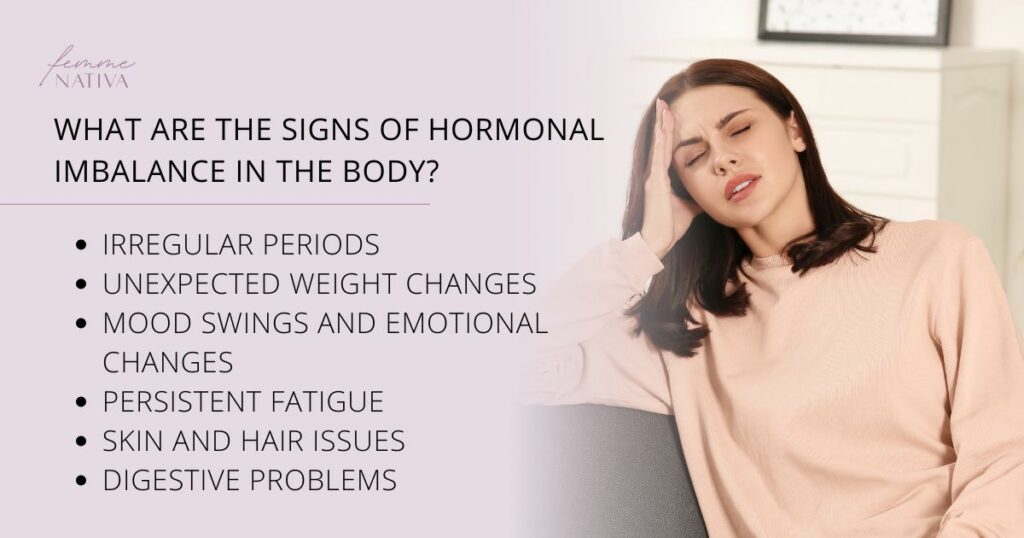
In my experience, here are some common signs that could signal hormonal imbalance:
IRREGULAR PERIODS
If your menstrual cycle is all over the place—like being unusually heavy or just not on schedule—it might be a sign of hormonal issues.
UNEXPECTED WEIGHT CHANGES
Gaining or losing weight suddenly, without changing your diet or exercise routine, can be linked to hormonal imbalances.
RELATED POST: HORMONES THAT MAKE YOU FEEL HUNGRY AND FULL
MOOD SWINGS AND EMOTIONAL CHANGES
Hormones like estrogen and cortisol can really affect your mood. If you’re experiencing things like anxiety, irritability, or feeling down, it might be connected to hormonal changes.
PERSISTENT FATIGUE
Feeling tired all the time, even when you’re getting enough sleep, can be a sign of hormonal imbalance, especially with your thyroid or adrenal glands.
SKIN AND HAIR ISSUES
Hormonal changes can lead to skin and hair problems. You might experience more breakouts or changes in skin texture, like dryness or oiliness, due to shifts in hormones. Hair loss or thinning can also occur from hormonal imbalances. If you notice these changes, keep track of them and consult with a healthcare professional for guidance and support.
DIGESTIVE PROBLEMS
If you’re dealing with bloating, gas, constipation, or diarrhea, it could be related to hormonal issues affecting your gut health.
Tip: If you’re experiencing several of these signs or they’re impacting your daily life, it’s a good idea to check in with a healthcare professional. They can help figure out if hormones might be the culprit and suggest the best ways to get things back on track.
TIPS FOR MANAGING HORMONAL HEALTH
Keeping your hormones in balance is essential for overall well-being and vitality. Whether you’re dealing with high estrogen levels, stress, or other hormonal issues, making thoughtful adjustments to your daily routine can make a big difference.
Here are some practical tips to help you manage your hormonal health effectively and feel your best:
DIET ADJUSTMENTS
What you eat has a big impact on your hormone levels. To help manage high estrogen levels, try upping your fiber intake with lots of vegetables, fruits, and whole grains. Cruciferous veggies like broccoli, cauliflower, and Brussels sprouts are great for supporting estrogen metabolism and can really help balance your hormones.
Here’s an easy Spinach Salad with Apples, Walnuts, and Feta you can try!
REGULAR EXERCISE
Staying active is key to keeping your hormones in check. Exercise helps lower excess estrogen and can boost your progesterone production. Aim for at least 30 minutes of moderate exercise most days—whether it’s brisk walking, yoga, running, or strength training. And don’t stress if you need 1-2 days off to rest it’s all part of a balanced routine!
STRESS MANAGEMENT
High stress can throw your hormones off balance. Try stress-busting techniques like meditation, deep breathing, or just enjoying your favorite hobbies. I love spending time with my loved ones, especially my daughter Cali, and doing things I enjoy to keep stress at bay.
AVOID HORMONE DISRUPTORS
Be mindful of chemicals called endocrine disruptors that can sneak into your body from things like plastics, pesticides, and some personal care products. These chemicals can affect your hormones and cause health problems.
A simple tip? Choose natural or organic products whenever possible, and avoid heating food in plastic containers to reduce your exposure to these chemicals.
ADDRESS ESTROGEN DOMINANCE
Estrogen dominance happens when there’s too much estrogen or an imbalance between estrogen and progesterone. This can be due to excess estrogen exposure, perimenopause, progesterone deficiency, or poor gut health.
SYMPTOMS OF ESTROGEN DOMINANCE
| Symptom | Description |
|---|---|
| Fatigue | Persistent tiredness even with enough sleep. |
| Sleep Issues | Difficulty falling or staying asleep, leading to poor rest. |
| Brain Fog | Feeling mentally cloudy or having trouble concentrating. |
| Hot Flashes and Night Sweats | Sudden warmth and sweating, often occurring during sleep or with minimal exertion. |
| Hair Loss | Thinning or shedding of hair more than usual. |
| Anxiety | Increased feelings of worry or nervousness. |
| Weight Gain | Unexplained weight increase, particularly around the abdomen. |
| PMS Symptoms | Symptoms such as irritability, breast tenderness, acne, constipation, bloating, and headaches. |
| Water Retention | Swelling or puffiness in various parts of the body due to fluid buildup. |
| Decreased Libido | Reduced interest in sexual activity. |
| Mood Swings | Sudden changes in mood, such as feeling overly emotional or irritable. |
| Irregular Menstrual Cycles | Menstrual periods that are inconsistent in timing or flow. |
| Heavy and Painful Periods | Menstrual bleeding that is unusually heavy or painful. |
| Infertility | Difficulty conceiving or sustaining a pregnancy. |
| Endometriosis | Painful condition where tissue similar to the uterine lining grows outside the uterus. |
FINAL THOUGHT
Remember, managing your hormonal health is a journey, not a destination. It’s all about getting to know your body, making smart choices, and being kind to yourself along the way :)
Don’t hesitate to reach out for help and use the resources available to you. With a bit of patience and effort, you can achieve a healthier, more balanced life. Your path is unique to you, but remember, you’re not alone in this. Many people are finding their way their way to better hormonal health, and there’s a lot of support out there to guide you. Keep going—you’ve got this!
Love Rachael xx

SOURCES
- Various Health Issues – https://my.clevelandclinic.org/health/diseases/22673-hormonal-imbalance
- High Levels of Estrogen – https://doi.org/10.1016/j.mce.2017.08.011
- Menstrual Problems and Weight Gain – https://my.clevelandclinic.org/health/diseases/22363-high-estrogen
- Isn’t Directly Linked to Weight Gain – https://my.clevelandclinic.org/health/body/24562-progesterone
- Blood tests – https://www.testing.com/hormone-imbalance-and-hormone-level-testing/
- Saliva tests – https://www.news-medical.net/whitepaper/20240506/Saliva-testing-for-hormonal-diagnosis-The-facts-and-basics.aspx
- Symptoms Like Irregular Periods, Mood Swings, or Unexpected Weight Changes – https://my.clevelandclinic.org/health/diseases/22673-hormonal-imbalance
- Cortisol Can Affect Your Mood – https://www.mayoclinic.org/healthy-lifestyle/stress-management/in-depth/stress/art-20046037
- Hormonal Changes Lead to Skin and Hair Problems – https://www.ncbi.nlm.nih.gov/pmc/articles/PMC7432488/
- Exercise Helps Lower Excess Estrogen – https://www.ncbi.nlm.nih.gov/pmc/articles/PMC4116411/
- Endocrine Disruptors – https://www.endocrine.org/patient-engagement/endocrine-library/edcs
- Estrogen Dominance – https://www.medicalnewstoday.com/articles/323280







 It’s FREE